The same order, entered again.
Customer details, quantities and dates are copied between the inbox, order system and dispatch sheet.
Baseline: manual touches per order.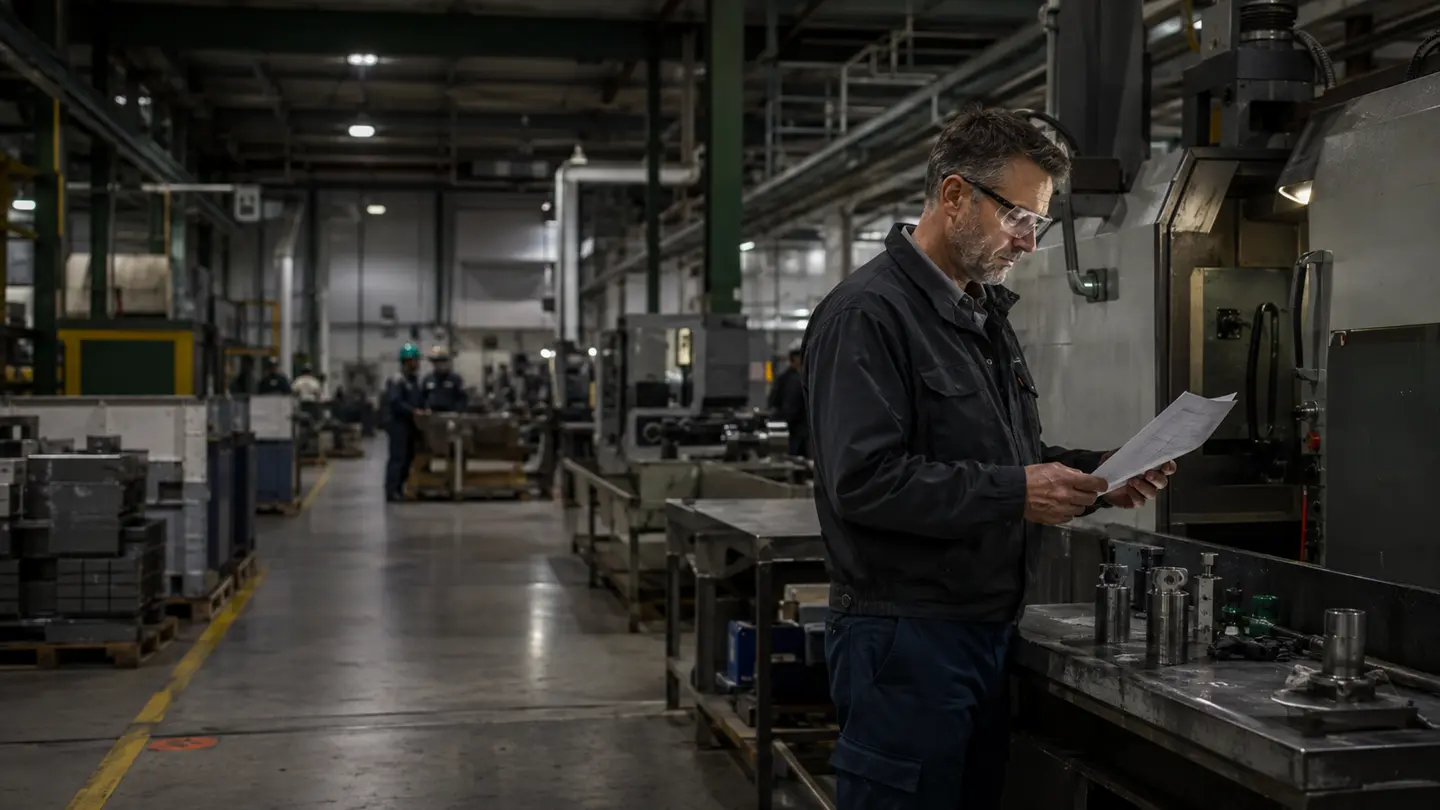
Industries / Logistics & Light Manufacturing
Connect orders, operations and finance. Give your team a current record, a clear next action and fewer status updates to chase.
Common examples include dispatch, warehousing, distribution, fabrication and small manufacturing. Fit depends on the workflow; this is not a claim of expertise in every listed profession.
Orders connected.
People in control.
Distribution / Delivery operations / Light manufacturing
An order crosses teams before it reaches a customer. When every handoff needs a call, a spreadsheet or another status check, coordination becomes a job of its own.
Where work slows down
Customer details, quantities and dates are copied between the inbox, order system and dispatch sheet.
Baseline: manual touches per order.A shortage, missing document or quality hold reaches the next team only after someone asks.
Baseline: exception-to-owner time.Shift notes and delivery events become another round of reconciliation before management or finance can act.
Baseline: reporting and reconciliation hours.Current vs controlled
Start with the actual path of an order. Keep the owner, the evidence and the next action attached to it.
Reference workflow / Logistics
Re-key an order from email.
Validate one order record.
Order desk confirms missing fields and the service commitment.
Call the warehouse for stock.
Link availability to the order.
Warehouse owner resolves shortages and substitutions.
Rebuild the driver handoff.
Prepare a reviewed dispatch packet.
Dispatcher owns route feasibility, loading and departure decisions.
Chase a message or signed copy.
Attach the delivery event and proof.
Driver confirms the actual delivery; disputed proof stays open.
A delay sits in an inbox.
Assign an owner and next action.
Operations reviews the cause and approves the response.
Explain the status from memory.
Draft an update from the current record.
Account owner approves promises, credits and revised dates.
Reconcile paperwork by hand.
Route complete records to billing.
Finance approves charges and resolves mismatches.
Dispatch decisions, customer promises and charges stay with your team.
Reference workflow / Light manufacturing
Requirements live in several files.
Keep a versioned order and specification.
Order owner confirms the accepted specification and due date.
Chase materials and availability.
Bring constraints into one review queue.
Planner approves the schedule and any priority change.
Re-enter shift notes later.
Capture progress against the work order.
Production lead verifies actual quantities and exceptions.
A hold is passed on verbally.
Record the hold and route the inspection.
Authorized quality staff approve release. AI cannot clear a hold.
Finished quantities lag behind.
Sync approved movements and quantities.
Inventory owner investigates differences before adjustment.
Recheck status before loading.
Prepare documents from released orders.
Shipping team confirms release, carrier and customer commitment.
Rebuild the shift report.
Summarize linked records and open issues.
Supervisor reviews the report and chooses the corrective action.
Quality release, safety, machine control and production decisions stay human-owned.
Exception handling / Reference operating pattern
A connected system should make the next decision easier, not silently make it for you.
Example: an order cannot proceed
The record stays open until the responsible person decides what happens next.
No automatic release or customer promiseLink the order, source document and current status.
Assign the right owner, deadline and missing information.
A person approves the response or keeps the hold in place.
Sync the approved action; retain the decision and audit trail.
The right role for each
Moves approved records.
Prepares information for review.
Owns accountable decisions.
Confirm system access, data permissions and record ownership first. Industrial controls and safety-critical automation require a separate scope and specialist review.
Manual coordination calculator / Modelled impact
Model one representative order workflow. Count people-time spent copying, checking and chasing, not elapsed delivery or machine time.
Your annual coordination scenario
1,000 hours redirected at 50% recovery.
This is capacity, not cash saved or a throughput guarantee. Freight, stock, revenue and headcount savings are not included. Software, implementation and review costs are not deducted.
Use this scenario in my assessmentAnnual hours = orders per day x touches per order x minutes per touch x operating days / 60. Annual labour equivalent = hours x loaded hourly cost. Potential capacity = baseline x recovery share. Count each manual touch once; use a separate scenario for a different workflow.
| Recovery | Hours / year | Capacity value (CAD) |
|---|---|---|
| 30% | 600 | $24,000 |
| 50% | 1,000 | $40,000 |
| 70% | 1,400 | $56,000 |
A positive investment and capacity value enable an investment / monthly capacity ratio. It is not a cash-payback forecast. Validate volumes, sampling, exceptions and ongoing effort before an investment decision.
Choose a bounded starting point
External industry evidence
These examples describe other organizations at a different scale. They show operating patterns, not a recommended platform replacement or a forecast for your business.
External published example / DHL Global Forwarding, Freight
DHL describes a Post Flight pilot that combined operations and flight data to flag potential problems for its operations team.
DHL / October 2020Read the published exampleExternal published example / Bel Fuse
Microsoft describes Bel Fuse bringing finance and supply-chain data together, with reports connecting orders, materials and factory production.
Microsoft customer story / 15 July 2020Read the published exampleLaunchSoloAI engineering evidence
Working build
A catering-delivery build linking invoice scanning, structured orders, packing checks and driver handoffs. The available record includes an application capture.
Not a freight-management deployment or measured customer ROI. Source is not published on this page.Inspect the working buildReference architecture
A documented multi-location pattern for validation, approval, audit and recovery when related settings change together.
An architecture record, not an installed manufacturing system or measured rollout.Inspect the control patternImplementation approach
Follow one order through the real handoffs.
Sample touches, time and exception ownership.
Test with permitted data and existing systems.
Check failures, permissions and human approvals.
Extend only after the operating owner accepts the result.
Start with the work
Bring one dispatch handoff, production update or recurring exception. We will map the baseline and the smallest change worth testing.
Analyze my operationsNo system access needed to start.