What changes
A clearly scoped improvement
A risk map, acceptance suite, routed cost boundary, failure replays and documented release conditions.
SaaS & AI Products
Make releases safer, protect customer data and keep AI costs visible. Test failures before customers find them, with a named person responsible when the system needs help.
Common examples include AI-built SaaS, internal AI tools, agent-enabled applications and fast-shipped software products. Fit depends on the workflow; this is not a claim of expertise in every listed profession.
Denied accessIdentity + record ownership
Retried eventSignature + deduplication
Provider failureTimeout + bounded recovery
Broken releaseDetection + rollback
A scoped audit and regression record; no blanket security certification.
SaaS founders / Product teams / AI engineering
The engagement
What changes
A risk map, acceptance suite, routed cost boundary, failure replays and documented release conditions.
What to measure
Track accepted results, blocked failures, review load and routed cost per accepted task.
How we start
Bring a representative example. Together we confirm scope, access, acceptance criteria and pricing before implementation.
ExploreCurrent vs controlled / Reference workflow
CurrentAn ambiguous request enters the app
ControlledValidate identity and request scope
CurrentA demo path is treated as complete
ControlledDefine accepted and failed states
CurrentFluent output is trusted
ControlledRequire task evidence and uncertainty
CurrentBroad actions are exposed
ControlledEnforce allowed tool actions
CurrentSource and tenant boundaries blur
ControlledPreserve tenant scope and provenance
CurrentOnly passing examples are shown
ControlledReplay representative and adversarial failures
CurrentRetries multiply unnoticed
ControlledBound routed calls and record spend
CurrentFailures arrive without an owner
ControlledEscalate with context and a named owner
People approve verifier changes, risk acceptance and release. A passing check is bounded evidence.
Interactive reference / No external action
Reference verdict
The checks pass in this fictional example. The consequential action still needs approval.
Automation / AI / Your team
Automation
Enforce routed limits, validate artifacts and replay deterministic checks.
AI assistance
Perform the bounded task and explain results with traceable evidence.
Human accountability
People approve verifier changes, risk acceptance and release. A passing check is bounded evidence.
Modelled impact / Calculator
Illustrative assumptions / editable
Rates are your own assumptions. A gateway limit covers only calls routed through it. Quality and human review require separate acceptance checks.
Use this scenario in my assessment ↗Base monthly cost = daily runs × calls per run × cost per call × operating days. Total = base × (1 + extra retry calls / 100). This is a linear scenario, not a token or provider billing simulator.
Practical starting points
Bounded workflow
Inspect user: An ambiguous request enters the app. Agree the owner and acceptance evidence before changing the live process.
ExploreBounded workflow
Inspect product: A demo path is treated as complete. Agree the owner and acceptance evidence before changing the live process.
ExploreBounded workflow
Inspect ai: Fluent output is trusted. Agree the owner and acceptance evidence before changing the live process.
ExploreExternal guidance / Separate from our work
EXTERNAL INDUSTRY EVIDENCE
A voluntary framework for incorporating trustworthiness into AI design, development, use and evaluation. This is external guidance, not certification of a LaunchSoloAI build. Reviewed 2026-09-12.
ExploreEXTERNAL INDUSTRY EVIDENCE
OWASP describes risk from excessive functionality, permissions and autonomy. The reference informs boundary design; it does not prove any implementation is secure. Reviewed 2026-09-12.
ExploreLaunchSoloAI engineering evidence
PUBLIC PRODUCT
Public source and replayable Proof Gate examples demonstrate bounded controls. Routed spend coverage excludes bypassed calls.
Open the evidence record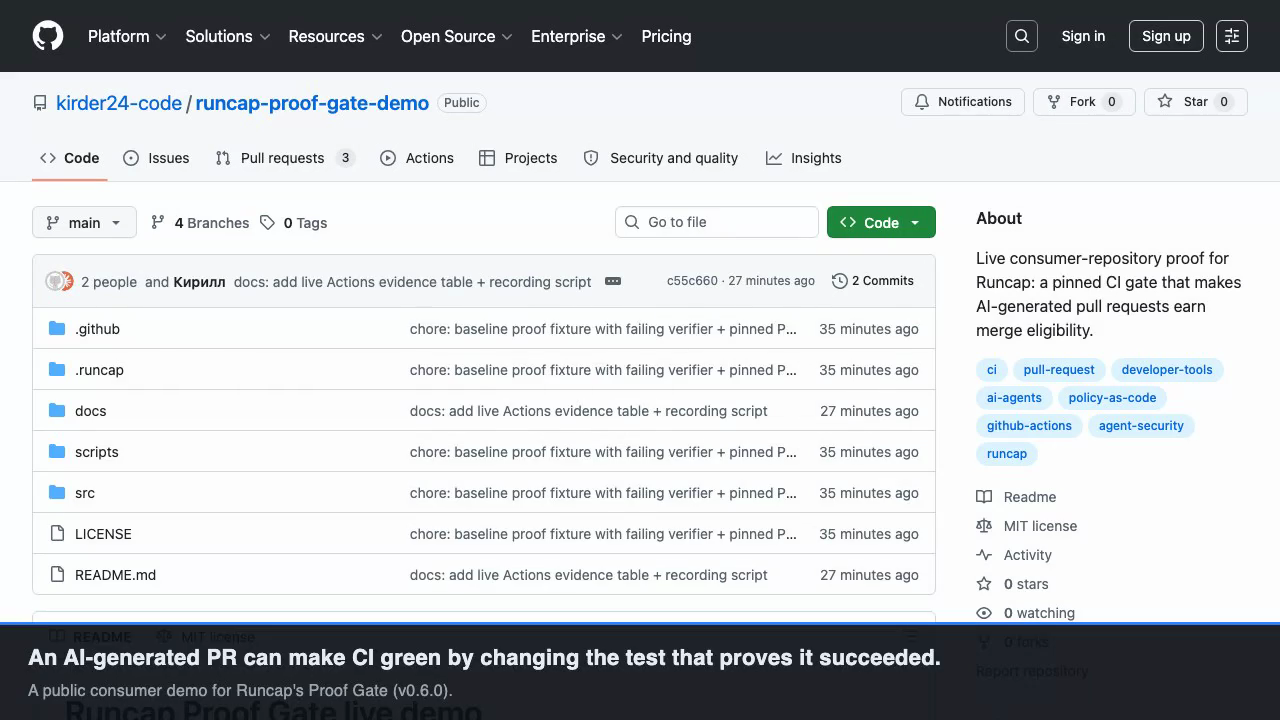
Implementation / Evidence before expansion
Confirm the workflow, owner and baseline.
Agree data, permissions, scope and unacceptable failures.
Implement the smallest useful intervention.
Track accepted results, blocked failures, review load and routed cost per accepted task.
Train the owner, document recovery and decide whether to expand.
A risk map, acceptance suite, routed cost boundary, failure replays and documented release conditions.

A safer next release
Bring one release risk, unreliable AI action or recurring incident. We will identify a testable next step, with clear human ownership.
Review my product workflow