What changes
A clearly scoped improvement
Prioritized findings, scoped repairs, regression evidence and a handover for the selected product paths.
SaaS Stabilization & AI-Code Reliability
Inspect the paths where a real user, a delayed webhook or a failed provider can break the product. Fix the agreed failure and leave a repeatable test.
Denied accessIdentity + record ownership
Retried eventSignature + deduplication
Provider failureTimeout + bounded recovery
Broken releaseDetection + rollback
A scoped audit and regression record; no blanket security certification.
Founders / Product engineering
The engagement
What changes
Prioritized findings, scoped repairs, regression evidence and a handover for the selected product paths.
What to measure
Record the reproduced failure, test coverage for the changed scope and time to detect recovery.
How we start
Bring a representative example. Together we confirm scope, access, acceptance criteria and pricing before implementation.
ExploreCurrent vs controlled / Reference workflow
CurrentCheck only the happy-path login
ControlledTest roles and denied access
CurrentTrust a client-supplied record ID
ControlledValidate ownership at the data boundary
CurrentApply a retried event twice
ControlledVerify identity and deduplicate events
CurrentWait indefinitely for a provider
ControlledBound retries, timeout and escalation
CurrentChange configuration without a recovery path
ControlledRehearse migration and rollback
CurrentHear about failure from a customer
ControlledExpose actionable errors to an owner
The product owner prioritizes risk; qualified reviewers approve access, security changes and release.
Bounded starting point
Record what exists, ask the accountable owner to confirm it, and agree a representative test before implementation.
Automation / AI / Your team
Automation
Validate permissions, deduplicate events, run regression checks and surface failures.
AI assistance
Assist investigation and prepare candidate fixes that must pass independent review.
Human accountability
The product owner prioritizes risk; qualified reviewers approve access, security changes and release.
Modelled impact / Calculator
Illustrative assumptions / editable
Recovered time is capacity, not reduced payroll. Implementation, software, training and ongoing review costs are excluded.
Use this scenario in my assessment ↗Annual hours = people × hours per week × working weeks. Labour equivalent = hours × loaded cost. Capacity = baseline × recovery share. Optional investment / capacity ratio = investment ÷ monthly capacity value; shown only for positive values.
Practical starting points
Bounded workflow
Inspect auth: Check only the happy-path login. Agree the owner and acceptance evidence before changing the live process.
ExploreBounded workflow
Inspect data: Trust a client-supplied record ID. Agree the owner and acceptance evidence before changing the live process.
ExploreBounded workflow
Inspect webhooks: Apply a retried event twice. Agree the owner and acceptance evidence before changing the live process.
ExploreExternal guidance / Separate from our work
EXTERNAL INDUSTRY EVIDENCE
A voluntary framework for incorporating trustworthiness into AI design, development, use and evaluation. This is external guidance, not certification of a LaunchSoloAI build. Reviewed 2026-09-12.
ExploreEXTERNAL INDUSTRY EVIDENCE
OWASP describes risk from excessive functionality, permissions and autonomy. The reference informs boundary design; it does not prove any implementation is secure. Reviewed 2026-09-12.
ExploreLaunchSoloAI engineering evidence
PUBLIC PRODUCT
Public source and replayable Proof Gate examples demonstrate bounded controls. Routed spend coverage excludes bypassed calls.
Open the evidence record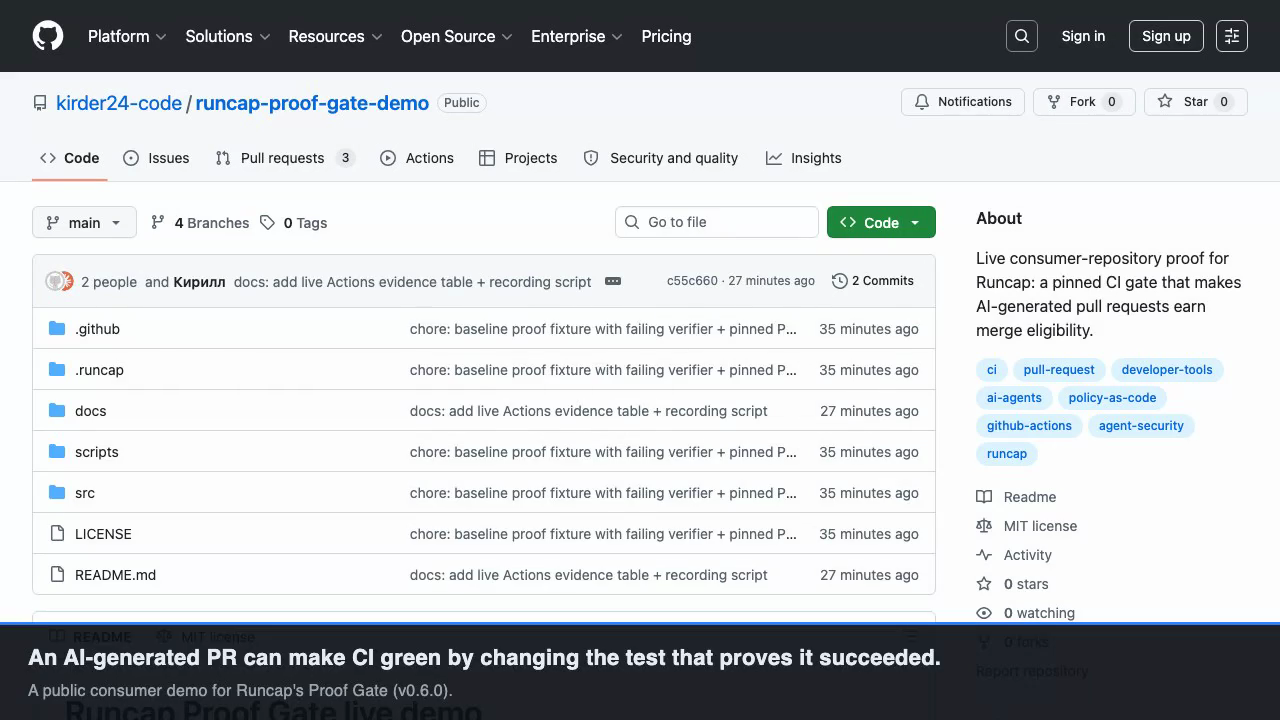
Implementation / Evidence before expansion
Confirm the workflow, owner and baseline.
Agree data, permissions, scope and unacceptable failures.
Implement the smallest useful intervention.
Record the reproduced failure, test coverage for the changed scope and time to detect recovery.
Train the owner, document recovery and decide whether to expand.
Prioritized findings, scoped repairs, regression evidence and a handover for the selected product paths.
A practical next step
Start with the process, the current tools and the person who owns the next decision. No system access needed.
Analyze my business