What changes
A clearly scoped improvement
A workload baseline, capacity constraint map, prioritized workflow changes, one bounded pilot and a measurement plan for throughput and administrative effort.
Capacity Growth
When hiring is difficult, inspect how much skilled time is absorbed by chasing, re-entering and reporting. Improve the work around the role.
Measure actual handling time before choosing an intervention.
Conceptual workload categories. Segment sizes are not measured proportions.
Business owners / Operations champions
The engagement
What changes
A workload baseline, capacity constraint map, prioritized workflow changes, one bounded pilot and a measurement plan for throughput and administrative effort.
What to measure
Compare administrative hours per completed job, queue age, exception load and accepted throughput. Check whether freed time can actually be used.
How we start
Bring a representative example. Together we confirm scope, access, acceptance criteria and pricing before implementation.
ExploreCapacity growth / Same team, clearer work
Separate service delivery from quoting, scheduling, reporting, information search and reconciliation. Include exception work instead of counting only the easy cases.
Keep useful tools, connect the handoffs and make routine approvals explicit. Add AI only where variable information needs interpretation and review remains affordable.
Check demand, field capacity, equipment, cash flow and customer service. Less administration creates potential; it does not remove every growth constraint.
For businesses across Canada and North America where work exists but recruiting another coordinator, dispatcher or administrator is difficult or expensive. The goal is capacity growth without administrative staffing rising in direct proportion to workload.
Review capacity constraints ↗Current vs controlled / Reference workflow
CurrentNew work adds another coordinator task
ControlledMap useful work separately from administration
CurrentSkilled people search and re-enter information
ControlledMeasure repeat handling and remove avoidable steps
CurrentScheduling and quoting wait on status checks
ControlledConnect scheduling, quotes and source records
CurrentApprovals interrupt the same experienced people
ControlledDelegate routine decisions within agreed limits
CurrentMore volume creates an invisible exception backlog
ControlledTrack accepted work, queue age and review load
Your team confirms workload, staffing and service quality. Capacity potential is not guaranteed growth, a layoff plan or a promised headcount reduction.
Source-linked reporting / Synthetic example
Fictional operating record
Reported status: ready for billing. Validation: held because the approval reference is missing.
Trace the source
A summary never fills in the missing approval. The source owner resolves the exception.
Automation / AI / Your team
Automation
Collect structured updates, route overdue tasks and refresh source-linked reporting.
AI assistance
Summarize permitted notes and draft status narratives with uncertainty visible.
Human accountability
Your team confirms workload, staffing and service quality. Capacity potential is not guaranteed growth, a layoff plan or a promised headcount reduction.
Modelled impact / Calculator
Illustrative assumptions / editable
Recovered time is capacity, not reduced payroll. Implementation, software, training and ongoing review costs are excluded.
Use this scenario in my assessment ↗Annual hours = people × hours per week × working weeks. Labour equivalent = hours × loaded cost. Capacity = baseline × recovery share. Optional investment / capacity ratio = investment ÷ monthly capacity value; shown only for positive values.
Practical starting points
Bounded workflow
Inspect demand: New work adds another coordinator task. Agree the owner and acceptance evidence before changing the live process.
ExploreBounded workflow
Inspect workload: Skilled people search and re-enter information. Agree the owner and acceptance evidence before changing the live process.
ExploreBounded workflow
Inspect handoffs: Scheduling and quoting wait on status checks. Agree the owner and acceptance evidence before changing the live process.
ExploreLaunchSoloAI engineering evidence
WORKING BUILD
An existing application capture documents invoice-to-delivery work. It does not establish customer ROI.
Open the evidence record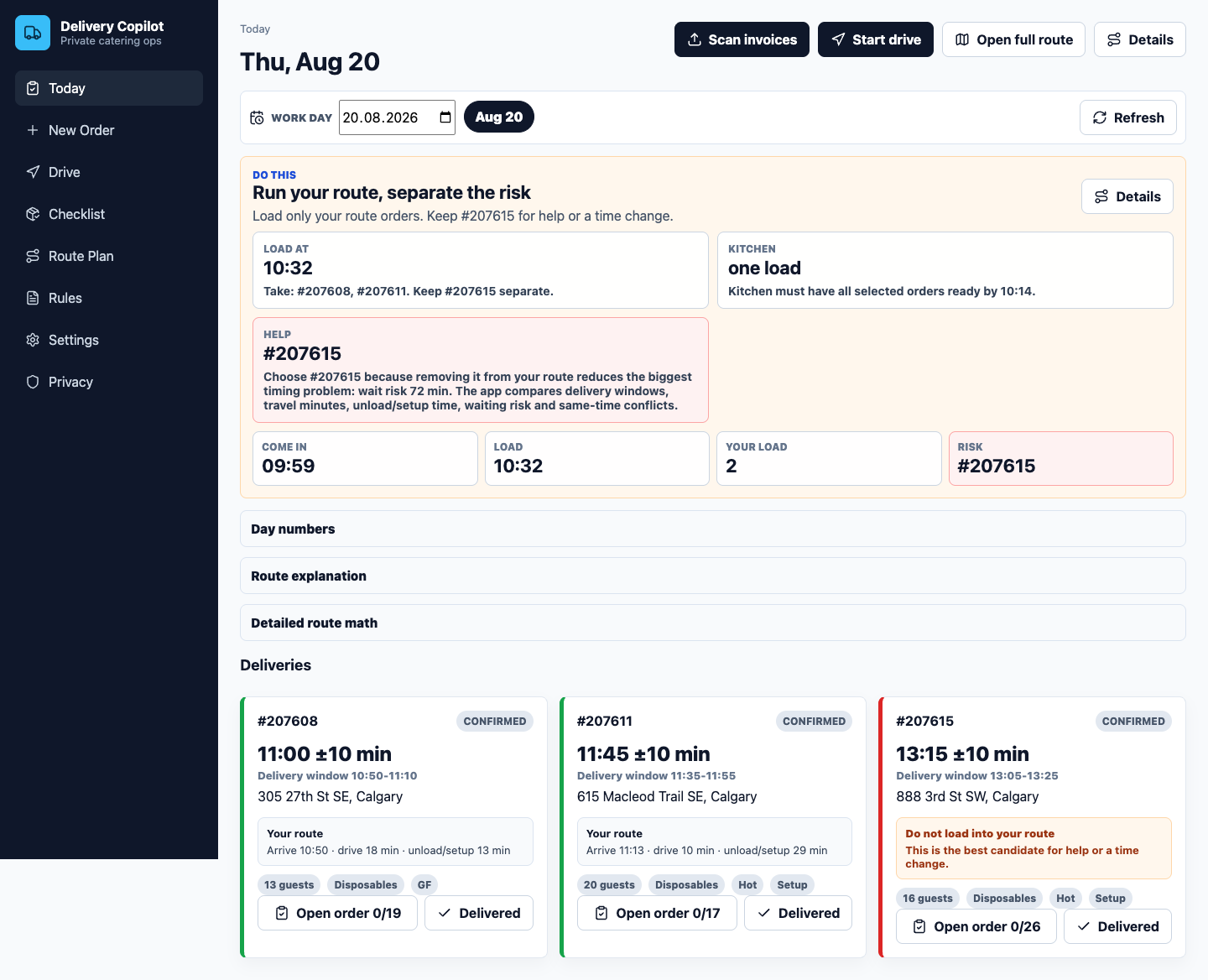
Implementation / Evidence before expansion
Confirm the workflow, owner and baseline.
Agree data, permissions, scope and unacceptable failures.
Implement the smallest useful intervention.
Compare administrative hours per completed job, queue age, exception load and accepted throughput. Check whether freed time can actually be used.
Train the owner, document recovery and decide whether to expand.
A workload baseline, capacity constraint map, prioritized workflow changes, one bounded pilot and a measurement plan for throughput and administrative effort.
Related service
A practical next step
Start with the process, the current tools and the person who owns the next decision. No system access needed.
Analyze my business