What changes
A clearly scoped improvement
A bounded integration, field and identifier map, ownership rules, retry and exception handling, replay tests and an operating handover.
Connect Fragmented Systems
Keep the tools that work. Define how records, ownership and exceptions move between them.
Capture source ID and event version
Match once and prevent duplicate writes
Record delivery, retry safely and reconcile
People own permissions, conflicting records, commitments and exceptions.
Business owners / Operations champions
The engagement
What changes
A bounded integration, field and identifier map, ownership rules, retry and exception handling, replay tests and an operating handover.
What to measure
Compare manual touches, handoff completion time, duplicate records and unresolved sync failures against the baseline.
How we start
Bring a representative example. Together we confirm scope, access, acceptance criteria and pricing before implementation.
ExploreCurrent vs controlled / Reference workflow
CurrentA request arrives without a stable identifier
ControlledCapture source ID and event version
CurrentMissing fields travel downstream
ControlledCheck the required fields and access scope
CurrentPeople copy the same details into several tools
ControlledMatch once and prevent duplicate writes
CurrentThe next task has no named owner
ControlledAssign the next task and due time
CurrentConflicts disappear into email
ControlledHold failures in an owned exception queue
CurrentNobody knows whether the update arrived
ControlledRecord delivery, retry safely and reconcile
People own permissions, conflicting records, commitments and exceptions.
System handoffs / Interactive map
A map does not connect accounts. Actual integration requires identifiers, permissions, ownership and an exception route.
Review this connectionAutomation / AI / Your team
Automation
Sync validated records, prevent duplicate writes and route work with an owner and due time.
AI assistance
Interpret variable documents and draft source-linked updates when deterministic mapping is insufficient.
Human accountability
People own permissions, conflicting records, commitments and exceptions.
Modelled impact / Calculator
Illustrative assumptions / editable
Recovered time is capacity, not reduced payroll. Implementation, software, training and ongoing review costs are excluded.
Use this scenario in my assessment ↗Annual hours = people × hours per week × working weeks. Labour equivalent = hours × loaded cost. Capacity = baseline × recovery share. Optional investment / capacity ratio = investment ÷ monthly capacity value; shown only for positive values.
Practical starting points
Bounded workflow
Inspect source event: A request arrives without a stable identifier. Agree the owner and acceptance evidence before changing the live process.
ExploreBounded workflow
Inspect validate: Missing fields travel downstream. Agree the owner and acceptance evidence before changing the live process.
ExploreBounded workflow
Inspect match record: People copy the same details into several tools. Agree the owner and acceptance evidence before changing the live process.
ExploreLaunchSoloAI engineering evidence
WORKING BUILD
An existing application capture documents invoice-to-delivery work. It does not establish customer ROI.
Open the evidence record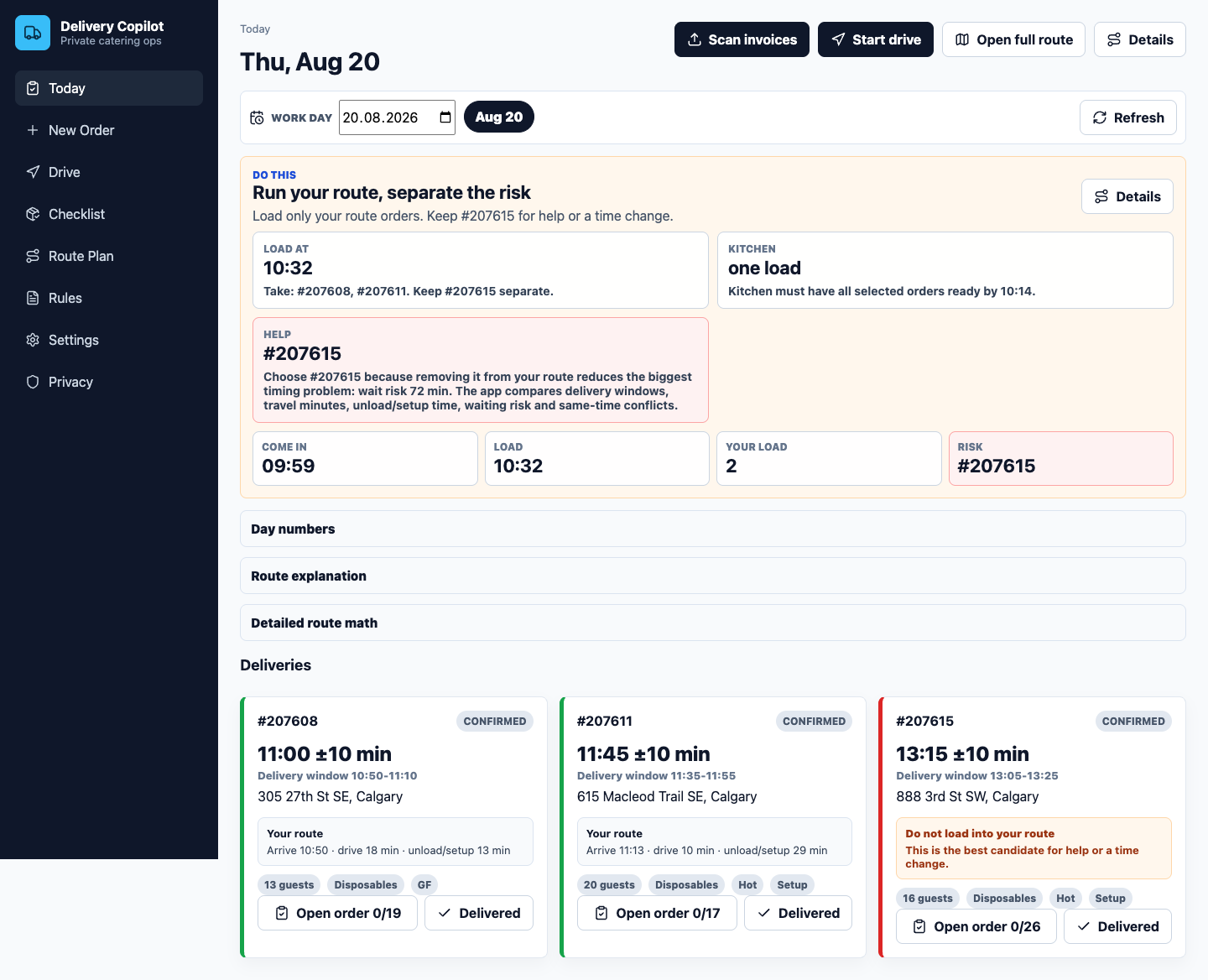
Implementation / Evidence before expansion
Confirm the workflow, owner and baseline.
Agree data, permissions, scope and unacceptable failures.
Implement the smallest useful intervention.
Compare manual touches, handoff completion time, duplicate records and unresolved sync failures against the baseline.
Train the owner, document recovery and decide whether to expand.
A bounded integration, field and identifier map, ownership rules, retry and exception handling, replay tests and an operating handover.
Related service
A practical next step
Start with the process, the current tools and the person who owns the next decision. No system access needed.
Analyze my business